
LIFAT Presentation
The LIFAT is the Laboratory of Fundamental and Applied Computer Science (UR 6300) of the University of Tours and INSA CVL. It has been created in 1970 and now gathers about a hundred researchers working on computer science. The LIFAT is based at several sites in both Tours and Blois. In Tours, it is based at Polytech Tours, the Faculty of Science and Technology, the IUT of Tours and the CESR. In Blois, it is based at the Faculty of Science and Technology, the IUT and INSA CVL. The laboratory is deeply rooted in its local community and carries out research that is recognised both nationally and internationally. The research conducted covers a range of topics, from projects linked to the socio-professional environment to more theoretical issues that contribute to the advancement of knowledge.
Research carried out at the LIFAT broadly focuses on the development of innovative models and algorithms for solving complex problems; in other words, various forms of artificial intelligence for decision support. More specifically, the LIFAT is recognised for its research into:
The LIFAT is a dynamic and active research laboratory in its fields of specialisation, producing, each year, more than 20 publications in selective international journals and more than 55 papers presented at selective national and international conferences. Over the last twelve years, the LIFAT has also carried out more than 62 research projects funded by the Région Centre, the ANR or the European Union, and has engaged in numerous collaborations with the socio-economic sector.
The LIFAT is also an active member of the ICVL research federation, a federation based in the Région Centre aimed at strengthening collaboration within the regional computer science community. Born out of a joint initiative by the LIFAT and the LIFO (the computer science laboratory at the University of Orléans), this federation was established in 2016.
Vincent T'KINDT, Director
Research carried out at the LIFAT broadly focuses on the development of innovative models and algorithms for solving complex problems; in other words, various forms of artificial intelligence for decision support. More specifically, the LIFAT is recognised for its research into:
- decision-making mechanisms that interact with humans (explainable AI, Human-in-the-Loop, multimodal human-machine interactions, and operations research for decision support),
- modelling, machine learning and optimisation. This involves fundamental research into the creation of groundbreaking models (for complex, more or less structured data) and efficient algorithms drawn from data science – including machine learning – and combinatorial optimisation.
- health (medical imaging, logistics within hospital systems, disease screening, etc.),
- sustainable development (the environment, the development of sustainable transport, etc.),
- industry and smart cities (maintenance prediction and planning, digital twins, etc.),
- digital humanities (preservation of cultural heritage, tourism).
- Database and Natural Language Processing Team (BDTLN), specialising in interactive mechanisms for analysis, data mining and recommendation; the definition and utilisation of the semantics of web services and data; and the automatic processing of languages and their interactions.
- Pattern Recognition and Image Analysis Team (RFAI), which specialises in the analysis of images, videos and documents, as well as data visualisation.
- Operational Research, Scheduling and Transport Team (ROOT),which specialises in the optimisation of complex systems, particularly in scheduling, transport and logistics.
The LIFAT is a dynamic and active research laboratory in its fields of specialisation, producing, each year, more than 20 publications in selective international journals and more than 55 papers presented at selective national and international conferences. Over the last twelve years, the LIFAT has also carried out more than 62 research projects funded by the Région Centre, the ANR or the European Union, and has engaged in numerous collaborations with the socio-economic sector.
The LIFAT is also an active member of the ICVL research federation, a federation based in the Région Centre aimed at strengthening collaboration within the regional computer science community. Born out of a joint initiative by the LIFAT and the LIFO (the computer science laboratory at the University of Orléans), this federation was established in 2016.
Vincent T'KINDT, Director
Our Sites
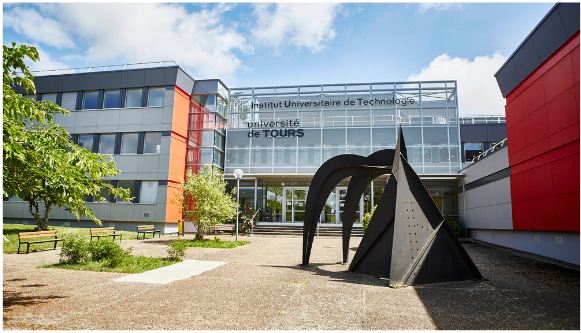
Tours Site
Discover our site in Tours, at the heart of innovation and research.
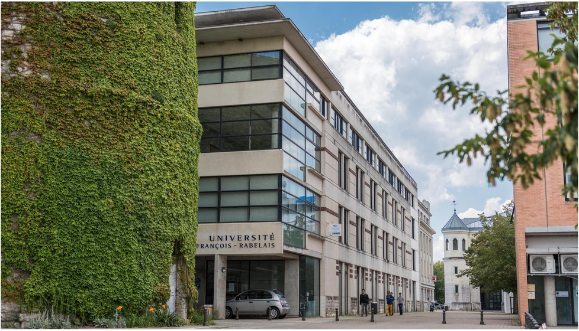
Blois Site
Visit our site in Blois, fostering collaboration and scientific excellence.
Partners & Labels